
Campus Conversations
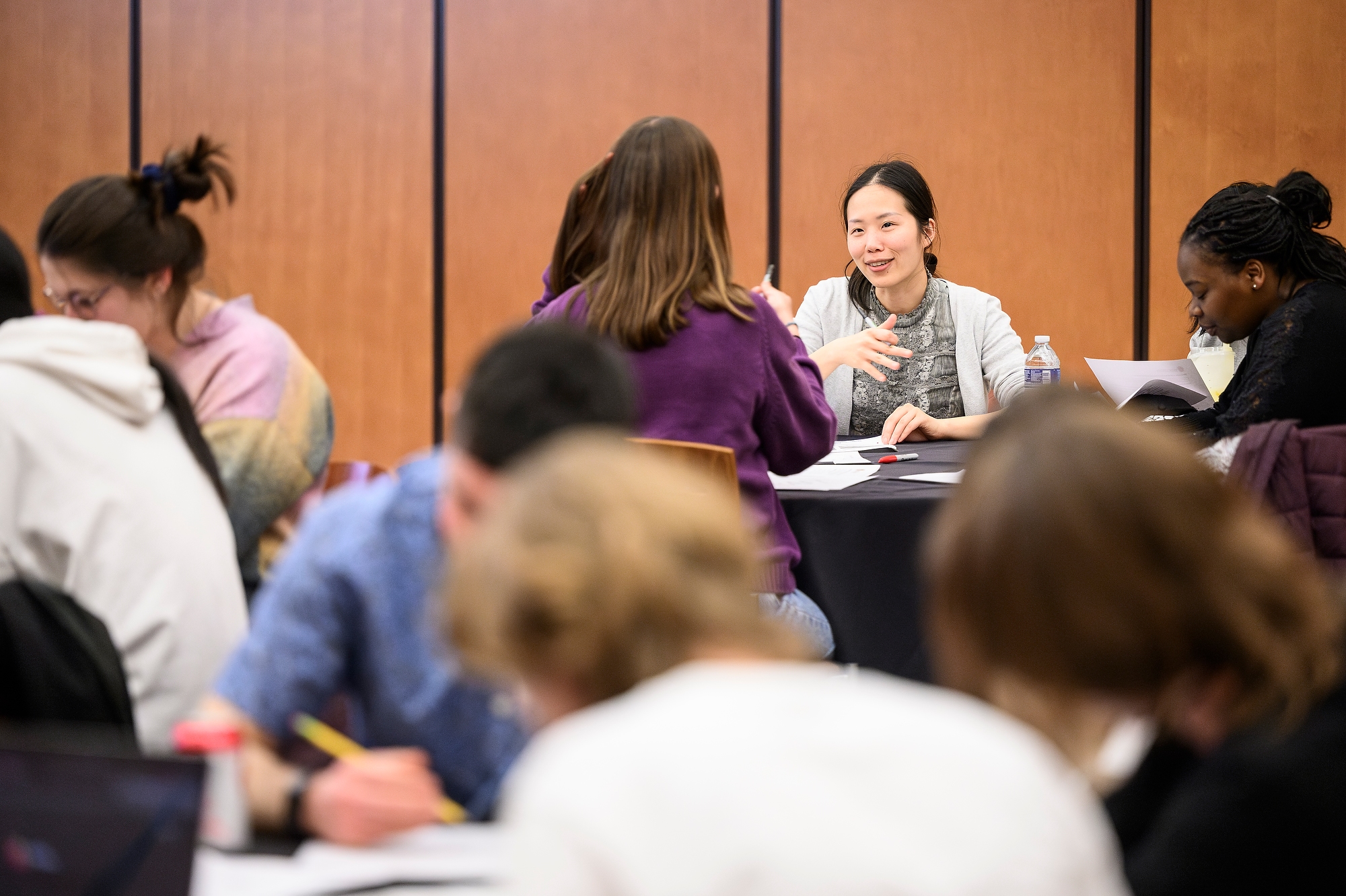
Between April 3 and 23, 2025, the Visioning Committee invited all students, faculty, and staff to participate in community conversations. Forty of these conversations took place and at least one committee member attended each to introduce the committee’s work and engage with attendees.
The Office of Strategic Consulting supported Visioning Committee members in staging and facilitating the conversations and ensured continuity across events. After reviewing the committee’s initial concepts, participants engaged in guided discussion designed to stimulate reflection and dialogue.
At the end of each conversation, participants submitted responses to four key questions about the committee’s initial concepts:
- What are your initial impressions?
- What is most meaningful or important to you about the initial concepts?
- What else do you think should be considered?
- What do you want the Visioning Committee to know?

The results
The conversations surfaced a variety of perspectives across multiple dimensions, reflecting shared themes and aspirations as well as tensions inherent to any large and complex institution. Key themes emerged that were consistent enough to merit focus and attention.
Student experience
Focus on holistic development
Consider the entire student experience and support student well-being, resilience, and out-of-classroom learning.
Inclusivity and accessibility
Provide a more inclusive and accessible environment for all students.
Modernizing curriculum
Modernize teaching methods, incorporate technology, and ensure the curriculum is relevant to current and future job markets.
Career readiness
Prepare students for their careers through internships, leadership opportunities, and practical experiences.
Wisconsin Idea
Public service and community engagement
The Wisconsin Idea should be central to the university’s mission, with more emphasis on public service and civic engagement and a focus on bidirectional communication and mutual benefit with communities across the state.
Economic and social impact
Regularly assess and communicate the university’s economic and social impact on the state and beyond.
Building relationships
Focus on building strong relationships with local communities, businesses, and other stakeholders.
Listening and responding
Listen to community needs and respond in meaningful ways.
Research and innovation
Interdisciplinary collaboration
Foster interdisciplinary research and collaboration to address complex societal challenges and take advantage of emerging opportunities.
Visibility and impact
Enhance the visibility of and public engagement with the university’s efforts in research, arts, and humanities.
Sustainability and environmental stewardship
Incorporate sustainability and environmental stewardship into teaching, research, engagement, and operations.
Administrative excellence
Efficiency and streamlined operations
Streamline and improve the efficiency of administrative processes to support the university’s mission.
Professional development
Invest in more professional development programs for faculty and staff to enhance their skills and support their growth.
Transparency and accountability
Create greater transparency and accountability in university operations and decision-making.
